
This is a 6-day, 4-night charter flight tour to Sapa, Hanoi, and Ha Long Bay, Vietnam, from Manila. It includes 4 nights in 4-star hotels with daily breakfast, 10 meals, an English-speaking guide, and key sights like Moana cafe, Ham Rong Mountain, Fansipan (via Monorail and cable car), Ha Long Bay cruise (Sung Sot Cave, Tip Top Island), Hoan Kiem Lake, and Hanoi Train Street. The package covers a 30kg checked bag and 7kg carry-on, and round-trip flights.
SAPA+HANOI+HA LONG BAY CHARTER FLIGHT 6D4N TOUR
5 Days 4 Nights-
Ninoy Aquino International Airport
-
Noi Bai International Airport
-
4 Stars Hotels
-
4 Breakfast / 5 Lunch / 3 Dinner
-
January to April
-
Family, Child Friendly, Cultural, Budget
-
English
-
180
Overview
Highlights
Sapa
A picturesque mountain town in northern Vietnam known for its terraced rice fields, misty valleys, and rich ethnic culture. Home to diverse hill tribes such as the Hmong and Dao, Sapa offers breathtaking landscapes and cultural charm all year round.
Moana Café
A stylish café and photo spot overlooking Sapa’s scenic mountains. Famous for its Bali-inspired swings, mirrors, and viewpoints — perfect for enjoying coffee while capturing Instagram-worthy shots of Sapa’s beauty.
Ham Rong Mountain
Located right in Sapa town, Ham Rong Mountain offers panoramic views of the valley and Fansipan Peak. The walking trail is lined with vibrant gardens, rock formations, and flower beds — ideal for nature lovers and photographers.
Cau May Street, Sapa Church & Love Market
Cau May Street – The heart of Sapa town, filled with cafés, shops, and handicraft stalls.
Sapa Church – A French Gothic stone church built during the colonial era, a symbol of Sapa’s heritage.
Love Market – A unique cultural event where ethnic minorities meet, sing, and exchange gifts — a colorful reflection of local traditions and romance.
Muong Hoa Monorail Train
Enjoy a scenic ride on the Muong Hoa Monorail, offering sweeping views of rice terraces and valleys. The train connects Sapa town to the Fansipan cable car station, making the journey as beautiful as the destination.
Fansipan – “The Roof of Indochina”
Take a thrilling cable car ride to the Fansipan Summit (3,143m) — the highest peak in Vietnam and all of Indochina. Experience stunning mountain panoramas, Buddhist temples, and the iconic summit marker at the top of the clouds.
Ba Dinh Square
The political heart of Vietnam, where President Ho Chi Minh declared the country’s independence in 1945. A vast and solemn square surrounded by historical landmarks and government buildings.
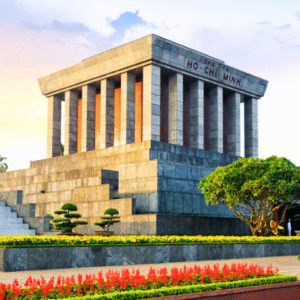
Ho Chi Minh Mausoleum
A monumental marble structure housing the preserved body of President Ho Chi Minh, Vietnam’s beloved revolutionary leader. Visitors come to pay their respects and learn about his life and legacy.
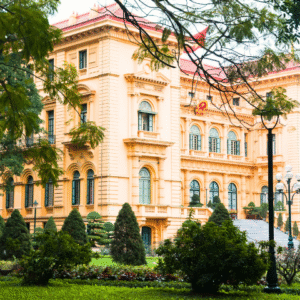
Presidential Palace
Built during the French colonial period, this grand yellow palace served as the official residence of the Governor-General of Indochina. Though Ho Chi Minh never lived here, he worked nearby and met dignitaries in its surrounding gardens.
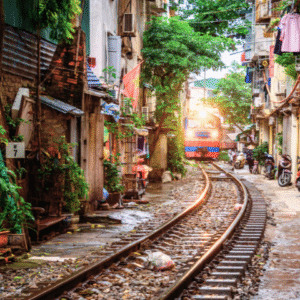
Hanoi Train Street
A fascinating narrow street where a train passes just inches away from houses and cafés. Visitors can sit along the tracks, enjoy drinks, and experience this unique blend of everyday life and adventure — one of Hanoi’s most famous photo spots.
Cruise Buffet
Embark on a luxury cruise through Ha Long Bay, enjoying a sumptuous international buffet onboard. Feast on fresh seafood while gliding past emerald waters and majestic limestone islands.
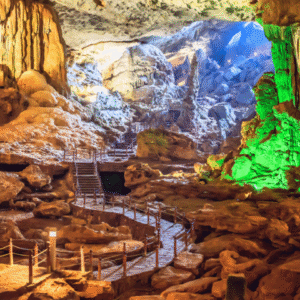
Sung Sot Cave, Titop Island & Hon Ga Choi Island
Sung Sot Cave (Surprise Cave) – One of Ha Long Bay’s largest and most spectacular caves, with shimmering stalactites and vast chambers.
Titop Island – Known for its sandy beach and a viewpoint offering 360° views of the bay.
Hon Ga Choi (Fighting Cock Island) – The iconic twin limestone islets that symbolize Ha Long Bay’s natural beauty.
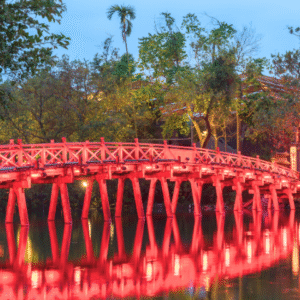
Hoan Kiem Lake & The 36 Ancient Streets (Old Quarter)
The cultural and historical heart of Hanoi.
Hoan Kiem Lake – A tranquil green lake with the Turtle Tower and the Ngoc Son Temple at its center.
36 Ancient Streets – A maze of narrow lanes filled with shops, street food, and traditional crafts — the perfect place to experience Hanoi’s vibrant local life.
Itinerary
-
Day
1MANILA - HANOI - SAPA (X/L/D)
- ETA:VJ MNL HAN 02:45 - 04:40 (reference)
- Arrival Airport, meet the tour guide at airport
- Transfer to SAPA by bus ·Visit Moana cafe
- Proceed to Ham Rong Mountain for panoramic view of SAPA
- Take a tour in the town: Cau May street, Sapa church, Love market After dinner transfer to hotel and check in
-
Day
2SAPA - HANOI (B/L/D)
- After breakfast, transport via Muong Hoa
- Monorail train ·Take the Legend cable carto reach the top of Fansipan
- Lunch: Enjoy a mountain buffet in VAN SAM restaurant
- Visit Sapa's most beautiful MOANA Internet celebrity coffee shop
- Transfer to HanoiAfter dinner transfer to hotel and check in
-
Day
3HANOI - HA LONG BAY (B/L/D)
- ·After breakfast ·Day tour in Hanoi(outside-view):
- BaDinh Square, Ho Chi Minh Mausoleum (photo stop), Presidential Palace, Hanoi Train Street
- Lunch: SEN Buffet Lunch
- Transfer to Ha Long Bay
- Visit silk/ Vietnam Herbal shop
- After dinner transfer to hotel and check in
-
Day
4HA LONG BAY (B/L/X)
- After breakfast Visit latex shop
- Ha Long Bay exclusive cruise tour by VDREAM or HECULES
- Lunch: Cruise Buffet Lunch
- Enjoy various activities through out the tour: Karaoke, lunch buffet, Vietnamese afternoon tea, Sung Sot Cave, Tip Top Island + Lookout, Hon Ga Choi Island)
- After dinner transfer to hotel and check in
-
Day
0506: HA LONG BAY - HANOI - MANILA (B/L/X)
- After breakfast Visit jewellery shop
- Transfer to Hanoi
- Explore Hoan Kiem Lake and 36 Streets
- Transfer to airport for flight back to Manila
- Bon Voyage ETD:VJ HAN MNL 21:15 - 01:45+1 (reference)
Includes
- - Charter flight Manila-Da Nang-Manila via VietJet
- - Roundtrip 30kg check in baggage
- - 7kg hand carry
- - 4 nights hotel accommodation based on twin sharing
- - Daily breakfast
- - Meals as listed in the itinerary
- - Sightseeing tours
- - Air-conditioned tour bus
- - English-Speaking tour guide
Excludes
- - Visa (IF NEED)
- - Extra Baggage allowance
- - Single Supplement: USD 88/PAX
- - PH Travel tax Php 1,620/PAX
- - Airport tax: USD45 / PAX (Hanoi-Manila)
- - Tips for driver and guide: USD5/PAX/day*4days=USD25/PAX
- - Expenses of a personal nature like telephone calls, mini bar, etc.
Frequently Asked Questions (FAQs)
What is included in the tour package?
The package includes round-trip charter flights from Manila to Hanoi, 4 nights in 4-star hotels across Sapa, Hanoi, and Ha Long Bay with daily breakfast, all meals (breakfast, lunch, dinner) as specified in the itinerary, 30kg checked baggage + 7kg carry-on, an air-conditioned tour bus, an English-speaking guide, and specified sightseeing with entrance tickets.
What costs are not included in the package price?
Excluded costs are mandatory tips for the driver and guide (USD 25), single supplement (USD 88), airport tax (USD 45 for Hanoi & Manila), PH tax (PHP 1620), visa (if needed), extra baggage allowance, personal expenses, and optional tours (e.g., Yacht + Luon Cave, Vietnamese massage, Hanoi Cyclo Tour, or a three-in-one package for USD 90).
How much does the tour cost per person?
The tour costs PHP 28,888 per person for adults and children with a bed, and PHP 28,388 for children without a bed (2-5 years old).
What is the baggage allowance?
Each passenger is allowed 30kg of checked baggage and 7kg of carry-on baggage per way.
Are there any mandatory shopping stops on this tour?
Yes, the tour includes visits to a latex shop, a jewelry shop, a silk/Vietnam Herbal shop, and local specialty shops.
Can the hotel or itinerary change?
Yes, hotels may be replaced with similar ones if unavailable, and the schedule or meal menus can change due to local situations.
What if I am traveling alone or prefer not to share a room?
If you are a single passenger (including children with a bed) and do not wish to share a room with other guests, you will need to pay a single supplement of USD 88.
Is the tipping fee for the driver and guide mandatory?
Yes, the tipping fee of USD 25 per person (USD 5/day x 5 days) is mandatory.
What is the passport validity requirement for this tour?
Your passport must be valid for at least 6 months before your departure date.
Terms and Conditions
- Booking deposit should be made within 3 days upon confirmation(non-refundable)
- Full payment should be made at least 45 days before departure
- Itinerary is subject to change without prior notice.
- Subject to weather conditions.
- All room bookings are based on twin sharing by default, no guarantee for triple room.
- In case above hotels are not available at your requested time, they will be replaced by similar ones